
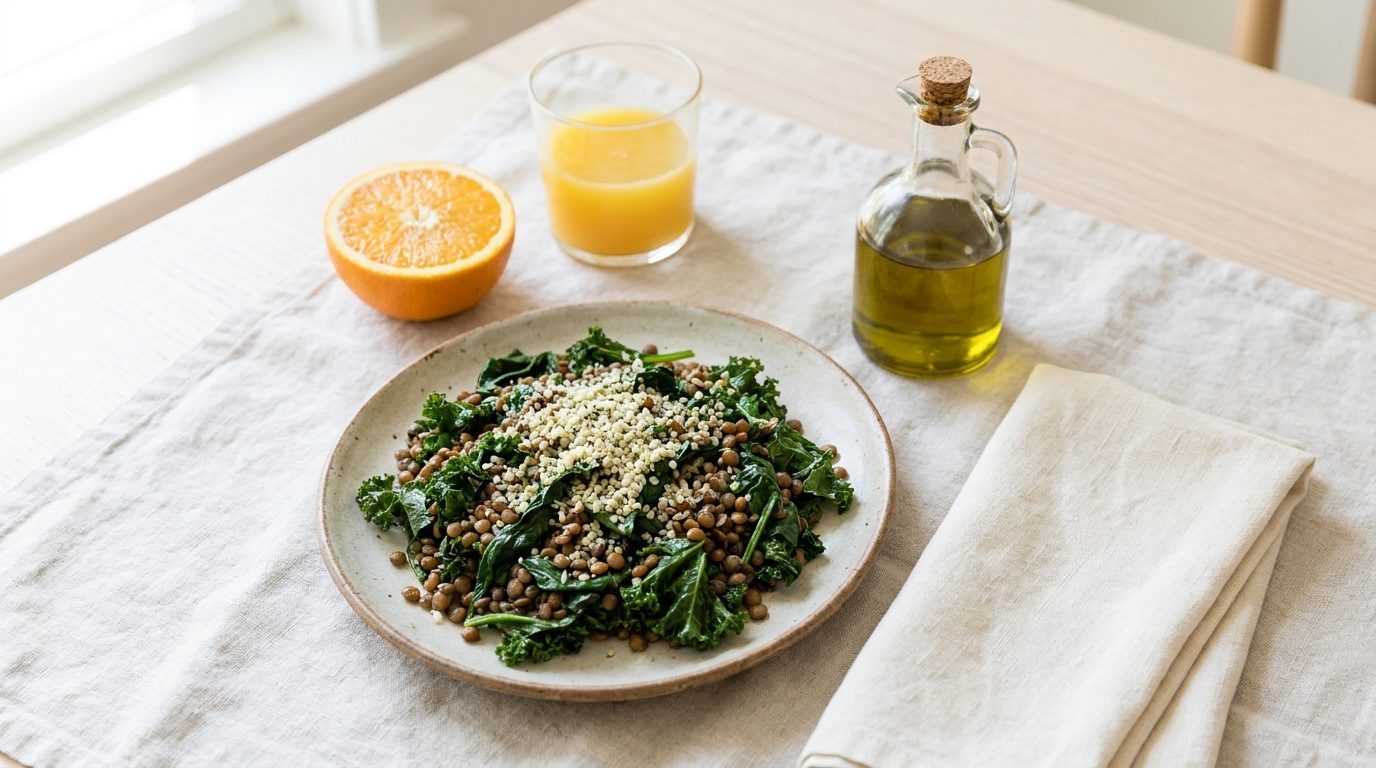
Most sports nutrition defaults were written around male athletes and scaled down. For women who train hard, the priorities reorder: iron loss is monthly as well as mileage-based, energy availability failures are more common and more costly, and protein timing around training matters at least as much. Hemp serves several of those priorities unusually well.
Iron, first and always
Menstruating athletes run iron losses that training amplifies, and low ferritin is among the most common performance limiters in women's endurance sport. Hemp hearts contribute non-heme iron alongside the magnesium and zinc working muscles burn through. Pair iron-bearing meals with vitamin C and keep coffee an hour away from them; absorption details do real work at this margin. Symptoms of persistent flatness deserve bloodwork, not guesswork.
Energy availability: the quiet failure
Under-fuelling relative to training load (low energy availability) degrades bone, cycle regularity, and adaptation long before it shows on a scale. Energy-dense, easy-to-eat foods are protective, and hemp is exactly that: two tablespoons of hearts add roughly 110 calories and 6 grams of complete protein to anything without requiring appetite for a bigger plate.
Protein distribution
Evidence supports spreading protein across the day rather than loading dinner, with 20 to 30 grams per meal as the practical target. Hemp's role is the breakfast and snack gaps, where women athletes most often run light: hearts on yogurt, hemp protein in a mid-afternoon smoothie, the patterns laid out in recovery with hemp.
What this is not
Hemp is not a treatment for cycle dysfunction, low ferritin, or bone stress; those are clinical conversations. It is a convenient, mineral-dense food that makes the everyday fuelling job easier, which for most training women is the job that actually needs help.