
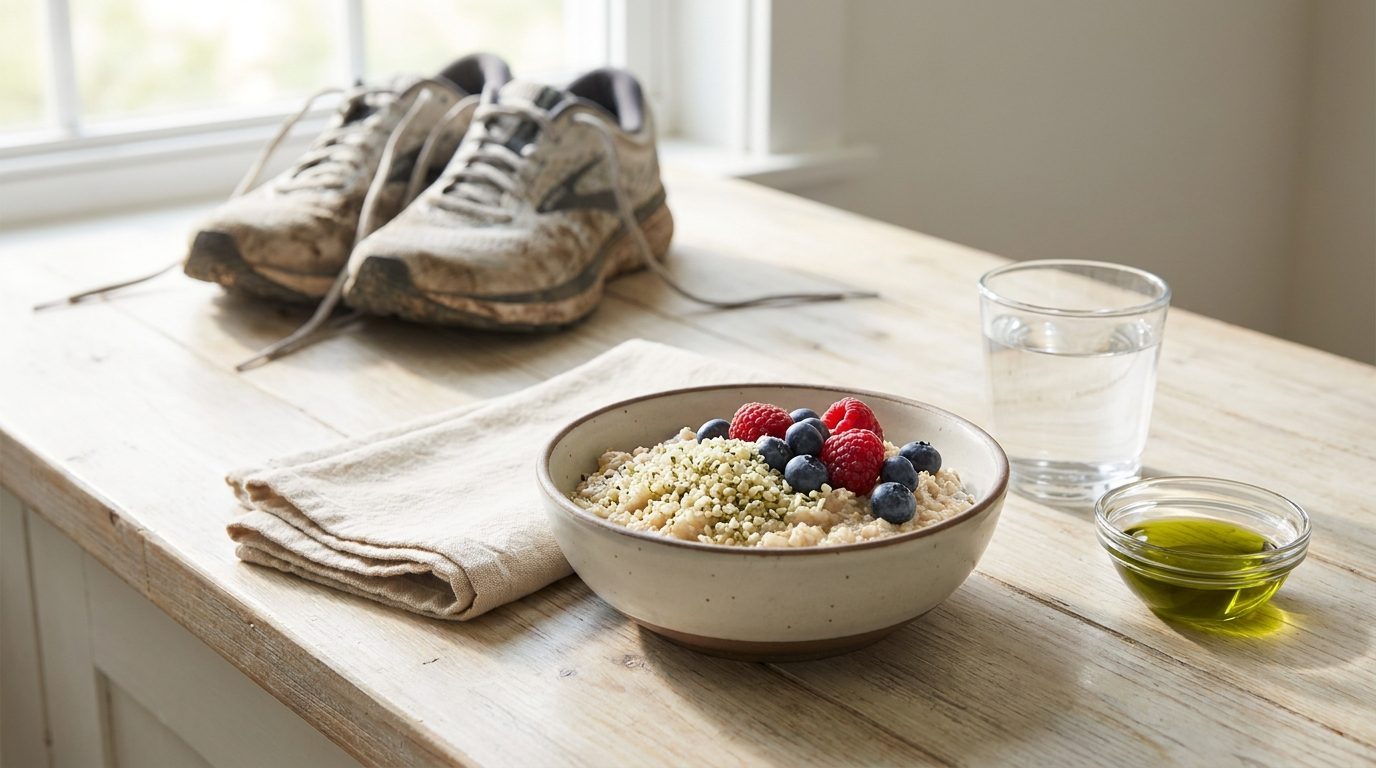
Distance running runs on carbohydrate, and no honest article pretends otherwise. Hemp's place in a runner's diet is everywhere except the race: daily protein quality, mineral replacement, and the unglamorous weeks of base training where recovery is built or borrowed against.
Where hemp fits the running week
- Daily base. Hemp hearts on breakfast deliver complete protein plus the magnesium and iron that running depletes through sweat and footstrike. For high-mileage runners, those two minerals are recurring blood-test disappointments, and food-first replacement beats discovering a deficiency in race month.
- Post-long-run. The classic window wants carbs plus protein; a smoothie with fruit, hemp protein, and milk covers both without sitting heavy on a stomach that just bounced for two hours.
- Easy-day meals. Hemp-dressed grain bowls and hemp-crusted fish slot into the high-quality, boring eating that fills most of a training block.
Where hemp does not fit
Race morning and in-race fuel. Fat and fibre slow gastric emptying, which is exactly wrong inside three hours of a start line and catastrophic mid-race. The same logic as the pre-workout timing rule, applied ruthlessly: race fuel is sugar and salt, and hemp waits at the finish.
The iron note for runners specifically
Runners, particularly women and high-mileage men, lose iron faster than sedentary eaters. Hemp contributes meaningful non-heme iron, absorbed better alongside vitamin C (the orange juice with breakfast cliche works). It is a contribution, not a treatment; persistent fatigue deserves a ferritin test, not a bigger bag of seeds, as covered in magnesium, iron, and active bodies.
A week that works
Hemp hearts daily at breakfast, hemp protein in the post-long-run shake, hemp oil on the recovery-day salad, and nothing hemp within sight of a race bib. That is the whole protocol, and its modesty is the point.